Insurance · UX Design Lead & Team Manager
Treasury Payment Approval System (TPAS)
New York Life
Executive Summary
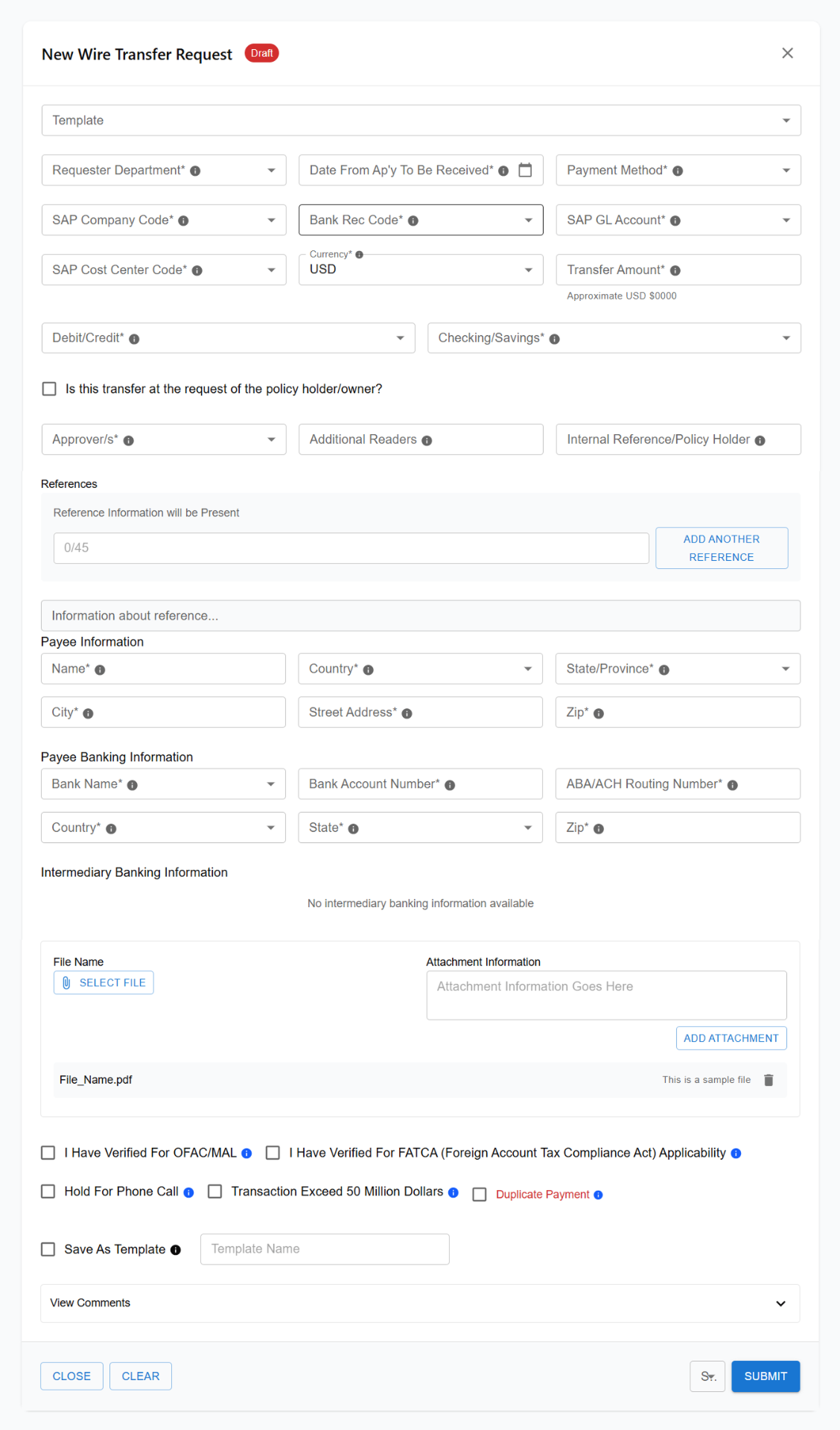
An enterprise-grade workflow tool enabling multi-level approval of Wire and Check payment requests at New York Life — replacing a legacy Lotus Notes platform with a modern, role-based system built on Unqork.

NY Life — TPAS — the unified workspace that replaced the legacy experience.
01 — The Problem
What we walked into.
Who was affected
5 distinct user roles — from requester through it admin — relied on a fragmented experience that slowed every approval and decision.
What was failing
New York Life's treasury operations relied on a decades-old Lotus Notes system to process high-value wire and check payment requests. The existing process was fragmented, manually driven, and lacked proper audit trails. Key pain points included: no structured multi-level approval workflow, high compliance risk on large transactions, inability to track request status in real time, no role-based access control, and significant operational cost to maintain the legacy platform.
Business cost
Without intervention, the legacy state blocked measurable wins — the redesign later unlocked 92 wireframes delivered and similar gains across the program.
02 — Research & Discovery
How we learned what mattered.
Methods
Stakeholder Workshops
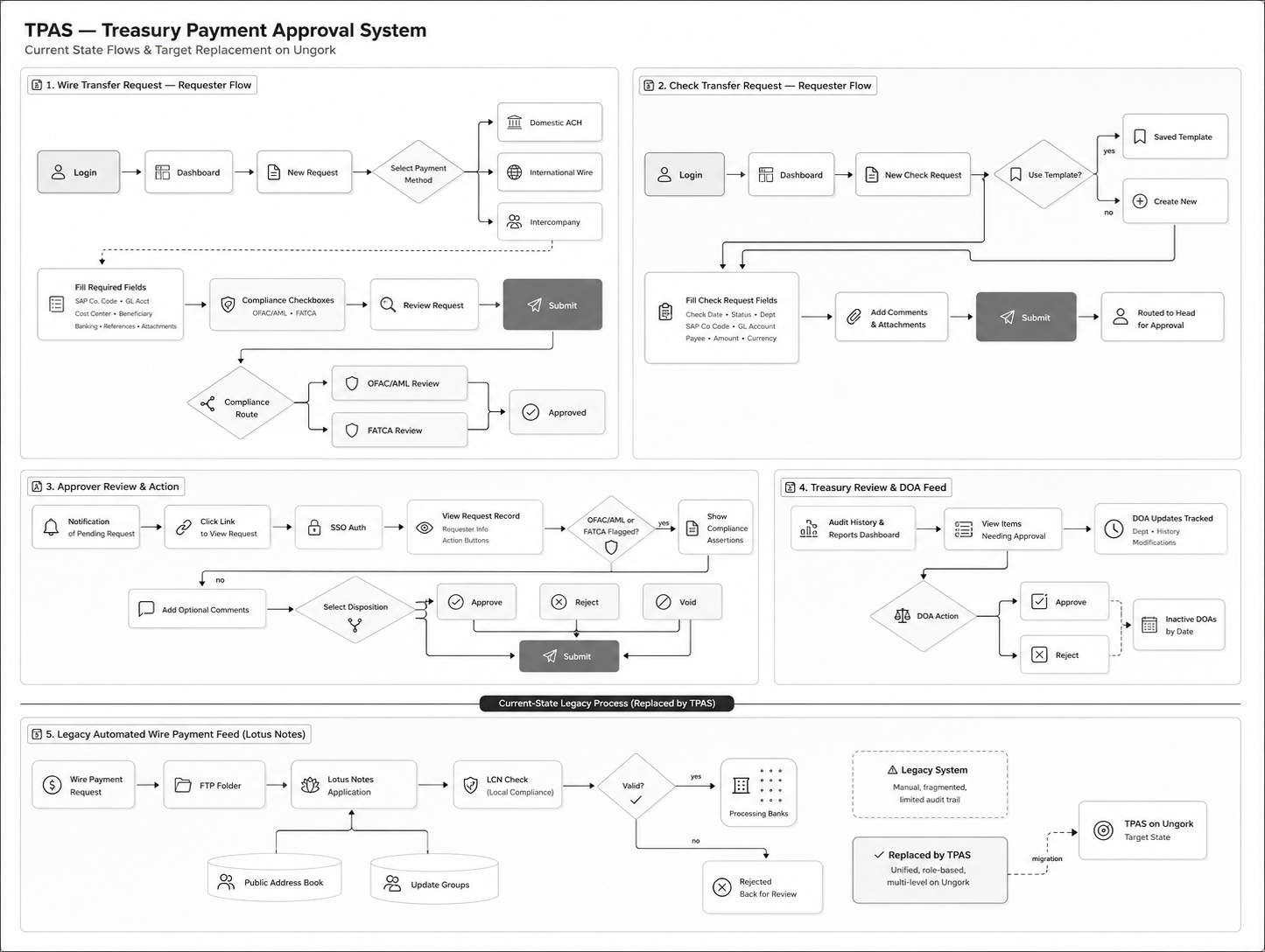
Ran workshops to understand scope, current-state context, task flows, and existing business process flow diagrams. Mapped the full current-state wire approval process running through Lotus Notes.
Key Findings
- Manual ACH/Wire & Check payments required a separate UI with multi-level approval workflow.
- Ability to update DOA limits near real-time so TPAS matches SAP intraday.
- Wires and ACH requests require two approvers; Inter-company requests require only one.
- Checks require two department approvers.
- DOA limit validation checks USD-translated amount only.
03 — My Approach & Key Decisions
How the work came together.
Collaborated with Client and Business Analysts to understand requirements and user pain points.
Conducted desk research to understand industry best practices and Unqork platform capabilities.
Collaborated with developers to understand technical constraints and platform limitations.
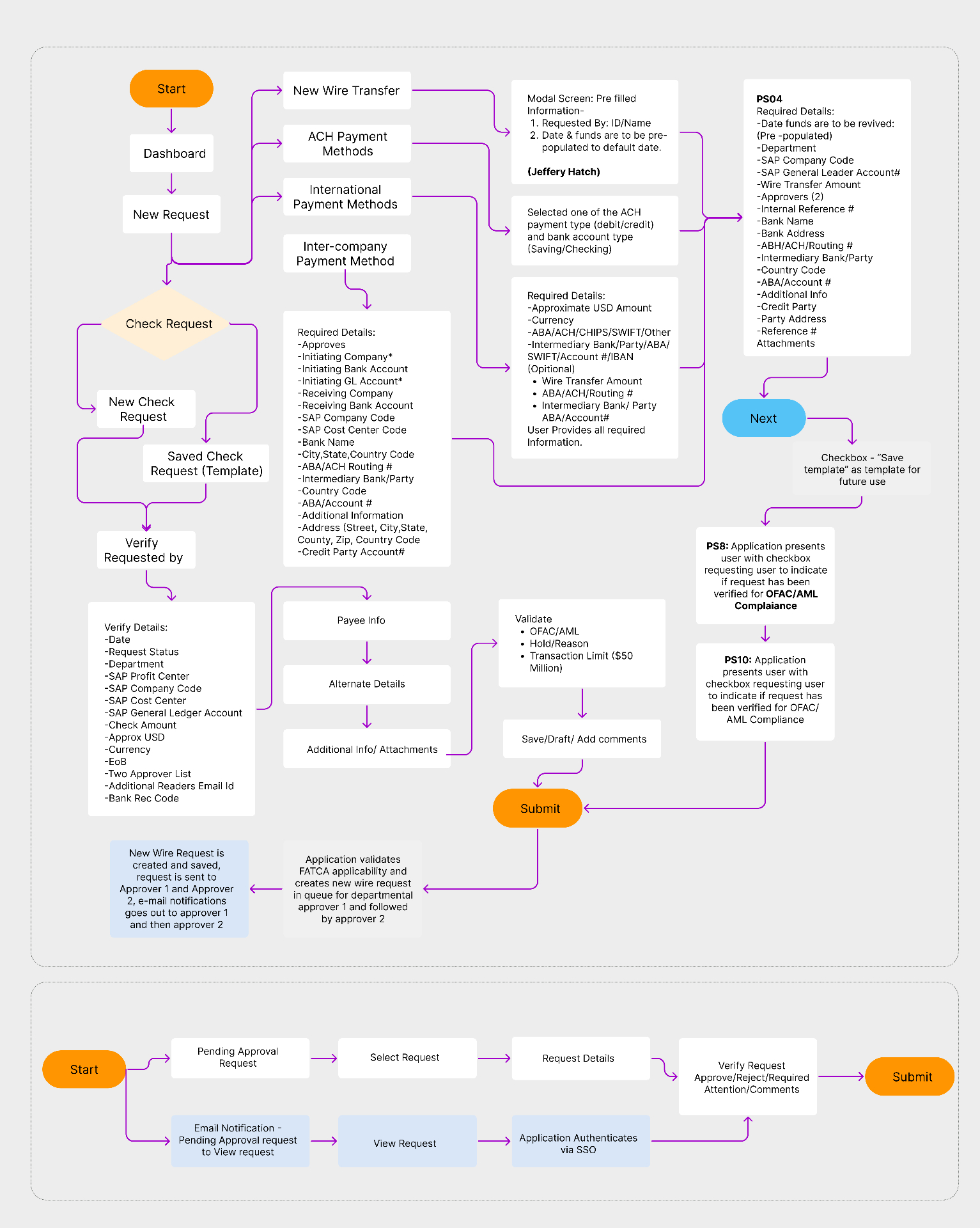
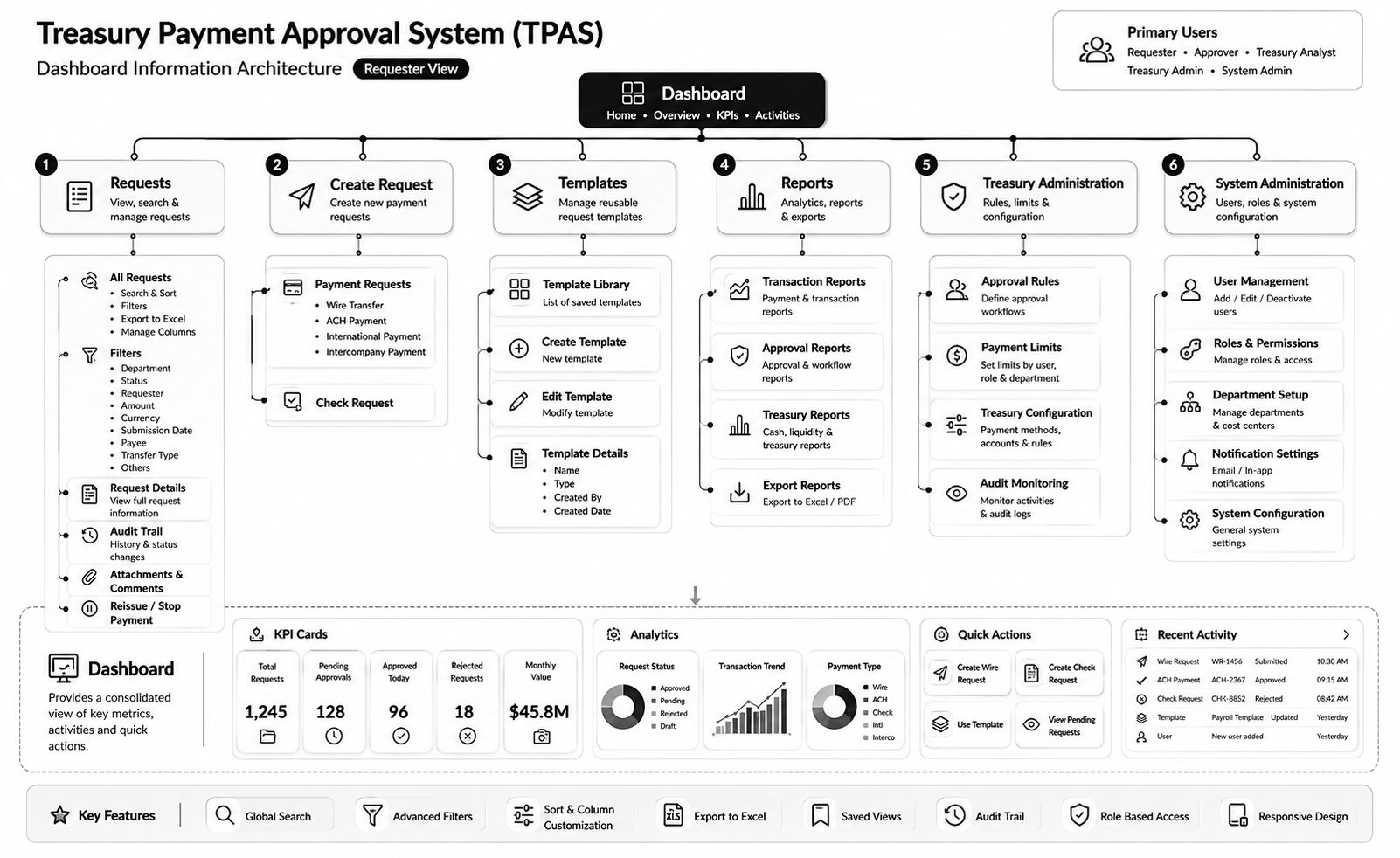
Conducted brainstorming sessions to define personas, task flows, IA, and initial mockups.
Incorporated stakeholder feedback at each design step with iterative refinements.
Delivered design assets to engineering and conducted a design audit after the first development phase.
Key Decisions
We chose Multi-level Approval Architecture
Designed a three-tier approval flow (Requester → Department Approver → Treasury) with role-based access at each stage, ensuring compliance and clear audit trails without overwhelming individual users with irrelevant actions.
We chose Dashboard with Infographic Panels
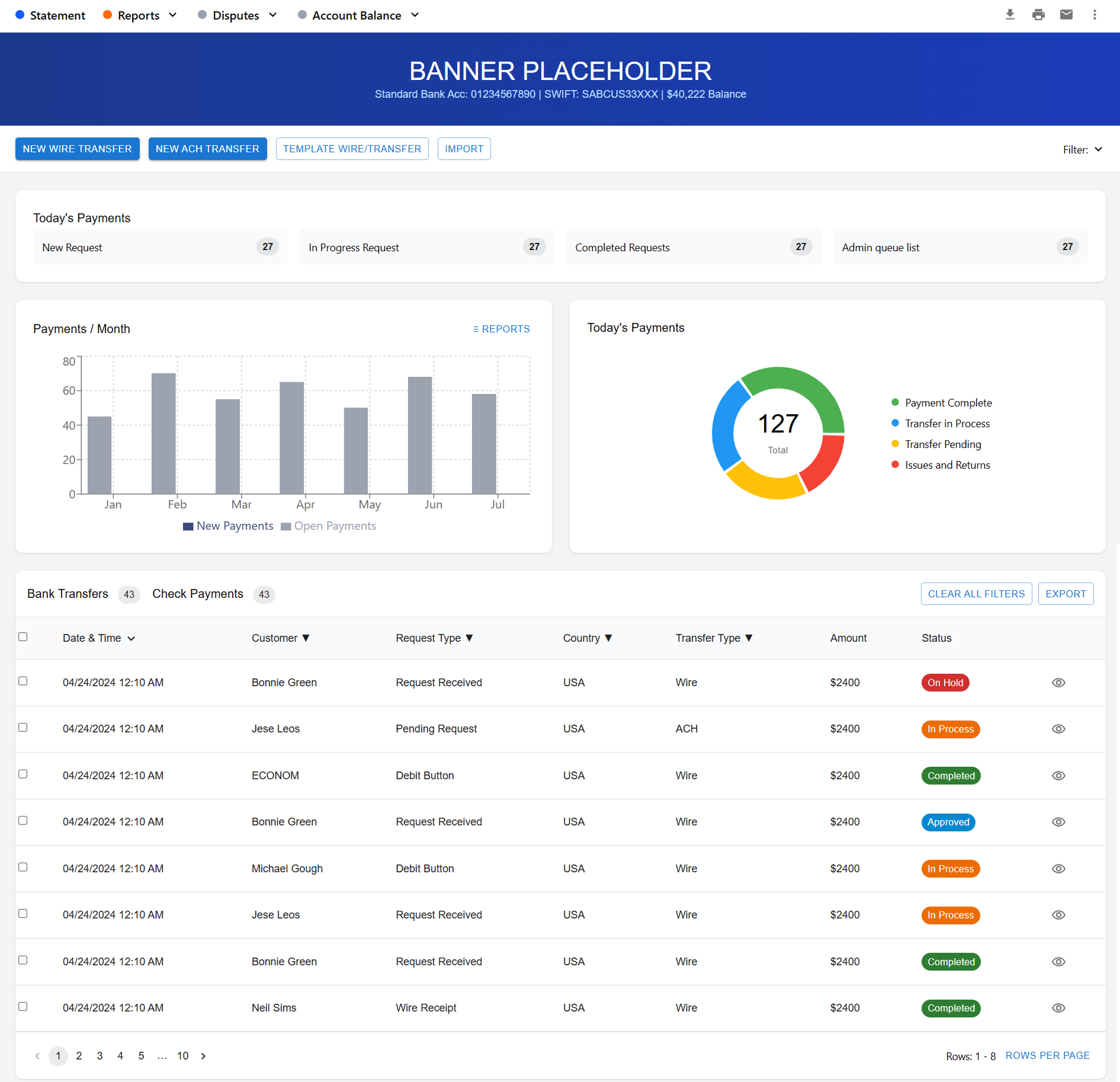
The dashboard landing page was divided into five distinct zones: header navigation, dismissible banner, request summary panels with bubble counts, monthly transaction charts (bar + doughnut toggle), and a paginated sortable data table — giving each role a clear at-a-glance view of their workload.
We chose Table Design System
Established a consistent table standard across all screens: differentiating header color, sort icons on all columns, inline search filters per column, date range filters for date columns, zebra-stripe rows, ‘Clear All Filters’ CTA, and pagination with configurable records-per-page — balancing data density with usability.
04 — Final UI
The screens that shipped.
05 — Outcome & Impact
What it moved.
Successfully replaced the legacy Lotus Notes platform with a scalable, role-based enterprise payment approval system — reducing manual effort, improving compliance visibility, and enabling real-time request tracking across treasury operations at New York Life.
Deliverables
- Information Architecture
- Task flows covering all 4 use cases
- 92 Wireframes (6 Very Complex · 12 Complex · 53 Medium · 18 Simple)
- 56 Visual Design screens (unique screens)
- Figma Component Library & Design System
- UX/UI Design Documentation covering all standards, feedback links, approved PDFs, and final Figma source files
06 — Reflection
What I'd do differently.
With more time, I'd invest earlier in moderated usability sessions with end users across every role — the design held up well against business requirements, but a tighter feedback loop with frontline operators would have surfaced edge cases sooner and shaped the IA with even more confidence.
Tools Used